
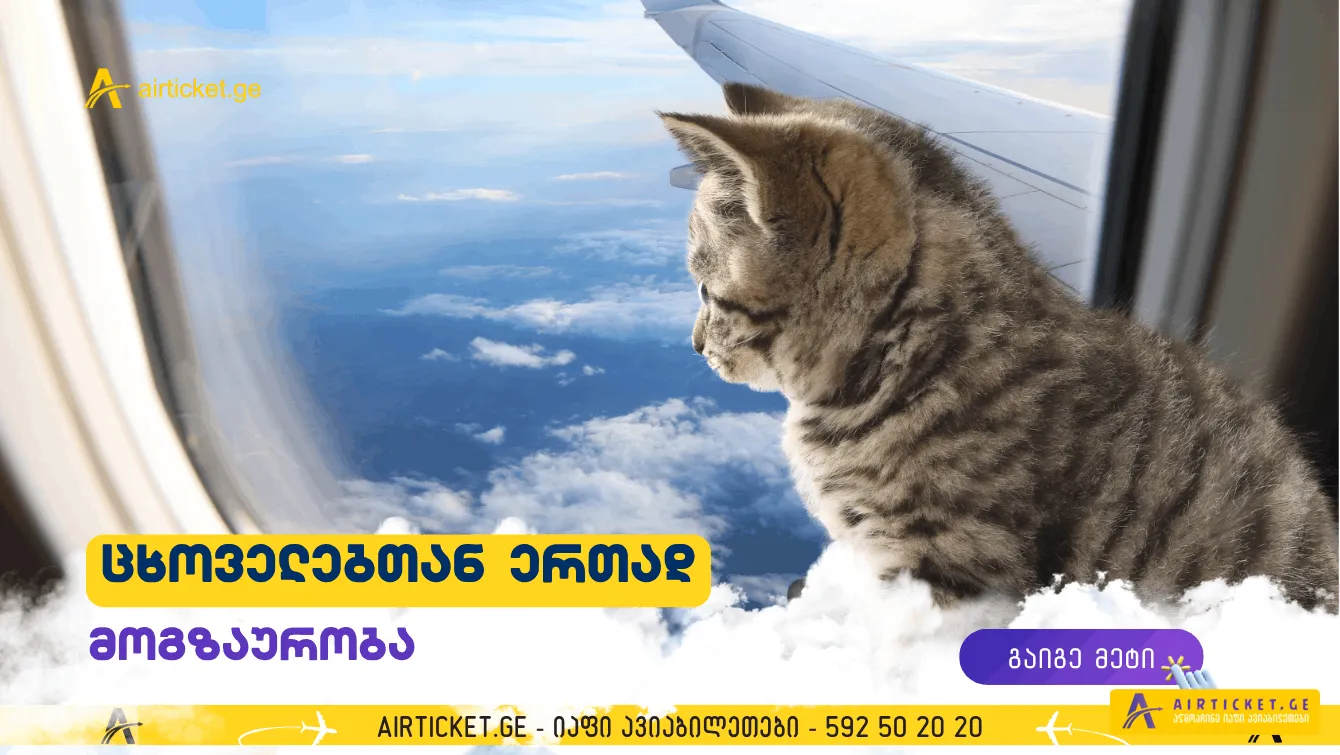
If you are planning to travel by plane with a dog, cat, parrot, bird or another pet, finding a normal flight ticket is only the first step.
Airlines have different rules depending on the type of animal, weight, carrier size, route, aircraft type and destination country. On some flights, your pet may be allowed in the cabin. In other cases, the animal must travel in the aircraft hold. Some airlines do not accept regular pets at all.
The most important rule is simple:
Do not purchase a non-refundable flight ticket before confirming that your pet can be accepted on that specific flight.
A flight may still have seats available for passengers while the limited pet quota is already full. Airlines such as LOT explicitly state that the number of animals accepted on each flight is limited.
book our special service: Flights with Pets — Flight & Pet Booking Help
How is a pet added to a flight booking?
Pets usually do not receive a separate passenger ticket or seat.
Instead, the traveler books a flight and then adds the pet as a special transportation service to the reservation.
There are two main types of pet transportation.
PETC — Pet in Cabin
PETC means the animal travels with you inside the passenger cabin in an approved pet carrier.
Many airlines allow cabin pets only when the combined weight of the pet and carrier is up to 8 kg, although the maximum carrier dimensions vary by airline.
Examples:
Pegasus Airlines: up to 8 kg including carrier, maximum carrier size 32 × 32 × 50 cm.
Turkish Airlines: up to 8 kg including carrier, maximum size 23 × 30 × 40 cm.
Lufthansa: up to 8 kg including carrier, maximum size 55 × 40 × 23 cm.
LOT Polish Airlines: up to 8 kg including carrier; dimensions vary by aircraft type, for example 55 × 40 × 20 cm on certain Boeing aircraft.
The exact carrier requirements should always be checked before travel.
PETC does not normally mean the animal can sit freely on your lap. In most cases, the pet must remain inside the approved closed carrier during the flight.
AVIH — Animal in Hold
If your pet is too large or too heavy for cabin transportation, some airlines allow the animal to travel in a special temperature-controlled aircraft hold.
This service is commonly known as AVIH — Animal in Hold.
For example, Turkish Airlines allows pets heavier than the cabin limit to travel in the hold under certain conditions. The combined weight of the animal and container can be significantly higher than the cabin limit.
Lufthansa also transports larger dogs and cats in the aircraft’s air-conditioned cargo hold on eligible routes.
LOT provides both cabin and hold transportation for dogs, cats and ferrets on eligible flights.
Which animals can travel by plane?
The animals most commonly accepted by airlines are:
- dogs;
- cats;
- ferrets on selected airlines;
- certain small birds;
- parrots on selected routes and airlines;
- guide and assistance dogs.
However, the exact animal species must always be confirmed before booking.
For example, Turkish Airlines allows cats, dogs and certain small songbirds such as parakeets and canaries under specific conditions. Some other birds may need to travel in the hold or via cargo depending on the route and species.
LOT Polish Airlines generally offers its standard pet service for dogs, cats and ferrets. Other animal species may need to be transported as cargo.
Pegasus Airlines accepts dogs, cats and some birds on domestic Turkish routes, while on international flights its regular pet service is mainly limited to cats and dogs.
Can a parrot travel by plane?
Yes, but traveling with a parrot can be more complicated than traveling with a dog or cat.
Some airlines accept certain small birds in the cabin. Others require birds to travel in the hold or as cargo.
For example, Turkish Airlines allows certain small birds, including parakeets and canaries, in the cabin under specific conditions. Other bird species may require hold or cargo transportation.
The exact parrot species also matters.
Many parrots are protected under the CITES international wildlife trade framework. Numerous Psittaciformes species are listed under CITES Appendix II, while some are subject to stricter protection. This means additional permits or documentation may be required depending on the species and destination.
For this reason, it is important to provide the exact species of parrot, not simply say “parrot”.
What documents are required for traveling with a pet?
There is no single universal document list that applies to every animal and every country.
The exact requirements depend on:
- the type of animal;
- country of departure;
- transit countries;
- final destination;
- local veterinary rules;
- airline requirements.
For dogs, cats and ferrets, the most common requirements may include:
- microchip;
- veterinary passport;
- valid rabies vaccination;
- veterinary health certificate;
- export veterinary certificate;
- rabies antibody titration test where required;
- additional import permits or treatments depending on the destination.
For animals leaving Georgia, the National Food Agency of Georgia issues an export veterinary certificate for dogs and cats under the applicable procedure.
Traveling from Georgia to the European Union
If you are traveling from Georgia to the EU with a dog, cat or ferret, preparation may take considerably more time.
EU rules generally require:
- an approved microchip;
- valid rabies vaccination;
- an Animal Health Certificate;
- and, for pets entering from certain third countries such as Georgia, a rabies antibody titration test.
The blood sample for the titration test must generally be taken at least 30 days after rabies vaccination, and the result must meet the required antibody level. A waiting period may also apply before entry into the EU.
These harmonized EU rules apply specifically to dogs, cats and ferrets. Birds, rabbits and other animals may be subject to different national or veterinary requirements.
What documents are needed for birds, rabbits and other pets?
Birds, parrots, rabbits and other animals may follow completely different rules from dogs and cats.
Birds can be subject to separate animal-health controls and import restrictions.
For rabbits and some other species, the European Commission notes that national rules of the destination country may apply rather than one single EU-wide system.
This is why the exact destination and animal species must always be checked before booking a flight.
How much does it cost to transport a pet by plane?
The cost depends on the airline, route, animal weight, carrier size and whether the pet travels as PETC or AVIH.
The following are indicative published fees and policies as of 2026 and should always be rechecked before ticketing.
| Airline | Typical pets accepted | PETC / Cabin | AVIH / Hold | Indicative fee |
|---|---|---|---|---|
| Pegasus Airlines | International: dogs and cats | ✓ Up to 8 kg, 32 × 32 × 50 cm | International AVIH generally not offered under standard pet service | International PETC around €65 |
| Turkish Airlines | Dogs, cats, certain birds | ✓ Up to 8 kg, 23 × 30 × 40 cm | ✓ On eligible routes | Depends on route and weight |
| AJet | Pet service on selected flights | Check specific flight | Check specific flight | Depends on route |
| LOT Polish Airlines | Dogs, cats, ferrets | ✓ Up to 8 kg | ✓ | Cabin pet from around €65 on some regional routes |
| Lufthansa | Dogs and cats | ✓ Up to 8 kg, 55 × 40 × 23 cm | ✓ | Cabin from around €50, hold from around €100, depending on route/size |
| Qatar Airways | Dogs, cats, birds | Regular pets in cabin: ✕ | ✓ Checked baggage / cargo | Around $200–$450, depending on weight and route |
| Wizz Air | Regular pets not accepted | ✕ | ✕ | Assistance dogs only |
| easyJet | Regular pets not accepted | ✕ | ✕ | Guide/assistance dogs only |
Pegasus currently publishes an international PETC fee of around €65. LOT publishes cabin pet charges starting from around €65 on certain short- and medium-haul routes. Lufthansa publishes different fees for cabin and hold transportation depending on route and container size. Qatar Airways uses weight- and route-based animal transportation pricing.
Pet transportation fees can change, so the final price should always be checked for the exact flight.
Do low-cost airlines accept pets?
Not all low-cost airlines follow the same policy.
For example, Pegasus is a low-cost carrier and does accept certain pets on eligible routes.
However, many other budget airlines do not accept regular pets.
Wizz Air
Wizz Air does not transport ordinary pets such as dogs, cats, birds or other animals.
The main exception is a properly documented assistance dog.
So with Wizz Air:
Dog — not accepted
Cat — not accepted
Parrot — not accepted
unless the animal qualifies as an approved assistance dog.
easyJet
easyJet also does not accept ordinary pets.
Recognized guide and assistance dogs may be accepted under the airline’s specific rules.
This means the cheapest airfare is not always suitable if you are traveling with a pet.
What size should a pet carrier be?
There is no single universal airline-approved pet carrier size.
For example:
| Airline | Maximum combined weight | Example cabin carrier size |
|---|---|---|
| Pegasus | 8 kg | 32 × 32 × 50 cm |
| Turkish Airlines | 8 kg | 23 × 30 × 40 cm |
| Lufthansa | 8 kg | 55 × 40 × 23 cm |
| LOT | 8 kg | Depends on aircraft, e.g. 55 × 40 × 20 cm |
For this reason, it is better to select the airline first and buy the carrier afterward, once you know the exact dimensions required.
For AVIH transportation, the container usually needs to be rigid, secure, ventilated and large enough for the animal to stand naturally, turn around and lie down.
Why should you confirm pet availability before buying the flight ticket?
Airlines limit the number of animals accepted on each flight.
This means a flight can still have many passenger seats available while its PET quota is already full.
For example, LOT explicitly states that the number of pets accepted on a flight is limited, while Lufthansa also requires pet transportation availability to be confirmed separately.
The safest order is:
Choose route → confirm pet acceptance → choose suitable flight → issue passenger ticket + pet service → prepare final documents.
How can we help with pet travel?
If you are planning to travel by plane with a dog, cat, parrot or another pet, send us your travel details and pet information.
Aviabiletebi.org can help you check:
- which airlines accept your pet;
- whether PETC or AVIH is available;
- pet weight and carrier requirements;
- possible flight options;
- pet booking availability;
- and the correct flight ticket and pet service arrangement.
Send us:
Origin → Destination, travel date, pet type, breed, approximate weight and, if available, carrier dimensions.